I recently happened to explain Kubernetes to my team, and to make it sound simple, I compared it to a city. I said, think of Kubernetes like how a city works. There are roads, traffic, signals, and people moving around, everything has a place and a purpose. It manages chaos by keeping order. While I was explaining it, something struck me.
Cities don’t just run on systems; they run because of people. And some of those people do the toughest jobs: like the ones who deliver food and parcels to our homes, day and night, manage traffic, manage the crowd, and keep the city running when the rest of us pause. They open shutters before sunrise, clean the streets while most are still asleep, and stand for hours in heat or rain to keep things in order. Every bit of comfort we enjoy, a warm meal on time, an empty bin, a functioning road, exists because someone else worked through their exhaustion. They make our lives easier, but their own lives keep getting harder, quietly holding together a city that rarely looks back on itself.
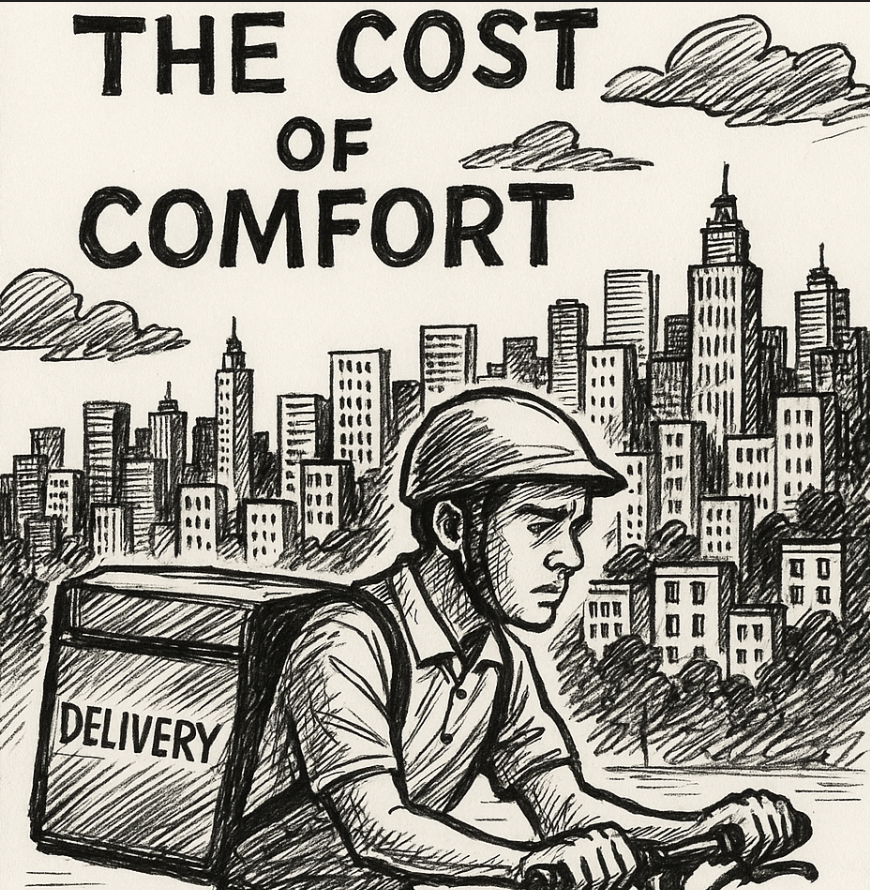
We have gotten used to comfort. We want everything to come to us, food, groceries, clothes, and we want it quickly.
The issue is not in wanting comfort. The issue is not wanting to place an order.
We often end up blaming ourselves for it, as if choosing an easier way of living is wrong. But comfort itself is not the problem.
The problem begins when convenience is built on someone else’s struggle. Throughout the history the pattern remains the same.
Companies compete to deliver faster and cheaper, pushing workers to keep up with impossible timelines. If one slows down, another takes its place, and the cycle continues. Everyone keeps moving, but no one asks if this pace is fair. It is not right to hold customers responsible either. When something feels unhealthy, we are often thought to fix our surroundings, not just our thoughts. The same applies here. Its the government that should bring balance by setting limits, reducing late-night deliveries, allowing only essentials like medicines after certain hours, and creating time for people to rest. Respect is not spoken; it is shown through action and compassion. True progress does not come from rushing, but from creating a world where comfort and dignity can coexist.
I would rather see parents and teachers talk about these things with children. To remind them that each of our time has value, that comfort should not come at another’s cost, and that slowing down isn’t failure. If the next generation learns to see fairness as part of growth, maybe our cities and the systems we build will feel more humane again.
Discussion